


During my time as a wedding planning, designer and now a bride to be I have come across lots of sayings, customs and some strange rituals associated with weddings and being a bride…but why and where do they originate?
In the past Brides were thought to be particularly vulnerable to evil spirits and many of the customs and traditions associated with weddings are to provide protection for the bride and then secure luck and happiness for the couple. There are so many customs and some of these rituals have lasted for hundreds of years and some are still used today…here are a few that have caught my eye over the years.
SURNAMES
It was thought unlucky for a woman to marry a man whose surname began with the same letter as hers. The sentiment was summarised in the following rhyme:
To change the name and not the letter
Is to change for the worst and not the better
The bride should not practice writing her new name before the wedding. This is thought to bring bad luck by tempting fate.
SOMETHING OLD, SOMETHING NEW …
Something old, something new
Something borrowed, something blue
And a silver sixpence in your shoe
The rhyme originated in Victorian times although some of customs referred in it are much older.
The “something old” represents the couples friends who will hopefully remain close during the marriage. Traditionally this was old garter which given to the bride by a happily married woman in the hope that her happiness in marriage would be passed on to the new bride.
“Something new” symbolises the newly-weds’ happy and prosperous future.
The “something borrowed” is often lent by the bride’s family and is an item much valued by the family. The bride must return the item to ensure good luck.
The custom of the bride wearing “something blue” originated in ancient Israel where the bride wore a blue ribbon in her hair to represent fidelity.
The placing of a silver sixpence in the bride’s shoe was to ensure wealth in the couples married life. Today some brides substitute a penny in their shoe during the ceremony as silver sixpences are less common.
THE WEDDING DRESS
It is thought unlucky for the bride to make her own wedding dress.
It is also unlucky for the groom to see the bride in her wedding dress before until she arrives at the ceremony.
The bride should not wear her entire outfit before the wedding day. Some brides leave a final stitch on the dress undone until it is time to leave for the ceremony when the outfit is completed.
WEDDING DRESS COLOUR
Most brides today marry in white which symbolises maidenhood. This tradition started by the rich in sixteenth century. The tradition was given a boost by Queen Victoria who chose to marry in white instead of silver which was the traditional colour of Royal brides. Before the white dress brides wore their best dress. The colour was a matter of preference. The following is a traditional rhyme offering advice on dress colour:
Married in White, you have chosen right,
Married in Blue, your love will always be true,
Married in Pearl, you will live in a whirl,
Married in Brown, you will live in town,
Married in Red, you will wish yourself dead,
Married in Yellow, ashamed of your fellow,
Married in Green, ashamed to be seen,
Married in Pink, your spirit will sink,
Married in Grey, you will go far away,
Married in Black, you will wish yourself back.
A green dress is thought to be unlucky unless the bride is Irish. The old expression that a woman has a ‘green gown’ was used to imply promiscuity, the green staining being due to rolling in grassy fields.
THE VEIL
Traditionally, brides have been thought to be particularly vulnerable to evil spirits and many of the customs and traditions associated with weddings are to provide protection. The veil was originally worn by Roman brides. It was thought that it would disguise the bride and therefore outwit malevolent spirits.
The veil became popular in Britain in the eighteen hundreds. In this country it is associated with modesty and chastity.
In some Eastern ceremonies the bride is veiled and the groom is not allowed to see the bride’s face until after the wedding ceremony.
In some Jewish weddings there is a ritual where the groom ensures that the bride is his intended before placing the veil over her face.
FLOWERS
Flowers have always been used for decoration at weddings.
Some people choose the flowers at the wedding on the basis of their symbolic meaning. For example orange blossom has always been associated with weddings because it signifies purity and chastity.
Peonies are avoided by some as they represent shame; azaleas represent temperance: roses symbolise love and snowdrops represent hope.
A combination of red and white flowers is avoided by the superstitious because they stand for blood and bandages.
However, people from different regions may attach other meanings to the same flower. For example lilies symbolise majesty to some but are thought unlucky by others because of their association with death.
The groom often chooses a flower for his buttonhole which also occurs in the bride’s bouquet. This is a vestige of the time when a Knight would wear his Lady’s colours to display his love.
ON THE WAY TO THE WEDDING
When the bride is ready to leave the house for the wedding ceremony a last look in the mirror will bring her good luck. However returning to the mirror once she has began her journey will result in bad luck.
Seeing a chimney sweep on the way to a wedding is though to bring good luck and it is still possible to hire one to attend wedding ceremonies. Other good luck omens when seen on the way to the ceremony include lambs, toads, spiders, black cats and rainbows.
Seeing an open grave, a pig, a lizard, or hearing a cockerel crow after dawn are all thought to be omens of bad luck. Monks and nuns are also a bad omen. This may be because the are associated with poverty and chastity. They are also though to signal a dependence on charity by the newlyweds.
Bad weather on the way to the wedding is thought to be an omen of an unhappy marriage, although in some cultures rain is considered a good omen. Cloudy skies and wind are believed to cause stormy marriages. Snow on the other hand is associated with fertility and wealth.
BRIDESMAIDS
Bridesmaids were dressed in a similar way to the bride for the same reason as the origin of veil. The bridesmaids were thought to act as decoys to confuse evil spirits and thus protect the bride.
THE COUPLE’S FIRST PURCHASE
It is said that the first partner who buys a new item after the wedding will be the dominant one in the relationship. Many brides ensure that they make the first purchase by arranging to buy a small item such as a pin from the chief bridesmaid immediately after the ceremony.
THE WEDDING CAKE
Cutting the wedding cake is now part of the ritual celebrations at the reception. The couple make the first cut together to symbolise their shared future.
Cakes have been associated with weddings throughout history. The Romans shared a cake during the wedding ceremony itself. This was not the rich fruit-cake we enjoy today. It was a plain confection made from wheat flour, salt and water. The Fijians and Some Native American tribes still incorporate cake in the wedding ceremonies.
In Britain early cakes were flat and round and contained fruit and nuts which symbolise fertility.
In the past the custom was to throw many small cakes over the bride in a similar way in which we throw confetti today. A modification of this custom was to crumble cake over the brides head and in some versions to break the cake over the Bride’s head. In Scotland Oat Cakes were used for this purpose. This was done to promote fertility.
In Yorkshire a plate holding wedding cake was thrown out of the window as the bride returned to her parental home after the wedding. If the plate broke she would enjoy a happy future with her husband but if the plate remained intact her future would be grim.
Another old English custom was to place a ring in the wedding cake. The guest who found the ring in their the piece of cake would be ensured happiness for the next year.
The shape of the modern three tiered iced cake is believed to have been inspired by the spire of Saint Bride’s Church in the City of London. It is said that unmarried guests who place a piece of wedding cake under their pillow before sleeping will increase there prospects of finding a partner and bridesmaids who do likewise will dream of their future husbands.
The top tier of the cake is often kept by couples for the christening of their first child.
CONFETTI
Confetti is Italian for sweets which in Italy are thrown over the couple as they emerge from the Church in that same way we use paper confetti. Raisins and nuts may also be used.
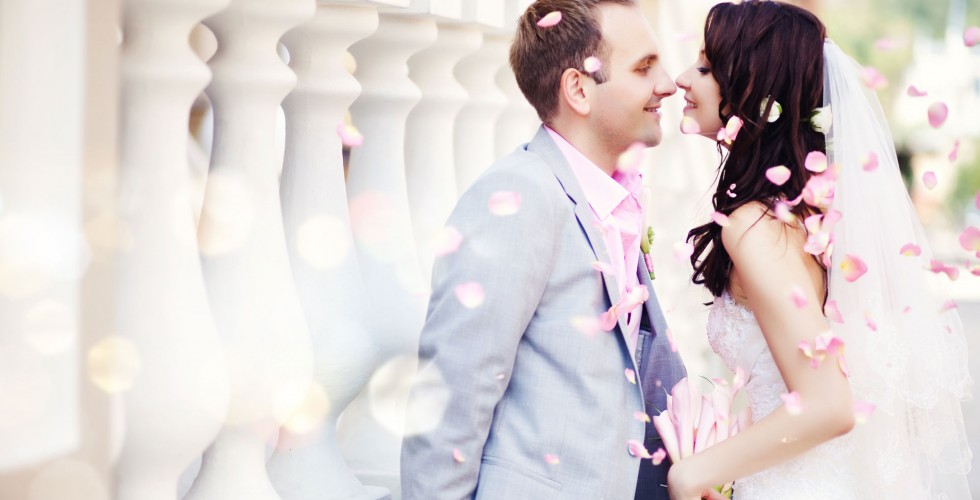
Before the use of paper confetti the married couple were showered with flowers, petals, rice or grains. This was to bestow prosperity and fertility on the couple.
SHOES
In the past there have been a number of customs involving shoes which were thought to bring good luck. The best known, which is still upheld, is to tie shoes to the back of the newlyweds’ car. This has evolved from the Tudor custom where guests would throw shoes at the newlywed couple. It was considered lucky if they or their carriage were hit.
Less well known is for the bride’s father to give the groom a pair of the bride’s shoes to symbolise the passing of responsibility for the daughter to her new husband. A variation of the custom is for the groom to tap the bride on the forehead with one of the shoes to assert his dominance.
The custom of the bride throwing her bouquet shoulder, described below, was originally performed by her throwing one of her shoes over her shoulder.
BOUQUET
After the reception the bride throws her bouquet back over her shoulder where the unmarried female guest group together. Tradition holds that the one who catches the bouquet will be the next one of those present to marry.
A parallel custom is for the groom to remove the garter worn by the bride and throw it back over his shoulder toward the unmarried male guests. Again the one who catches it will be the next to marry.
CROSSING THE THRESHOLD
After the wedding the bride must enter the new marital home through the main entrance. It is traditional for the groom to carry the bride over the threshold when they enter for the first time. The reason for this is uncertain. One explanation is that the bride will be visited by bad luck if she falls when entering. An alternative is that the bride will be unlucky if she steps into the new home with the left foot first. The bride can avoid both mishaps by being carried. A third explanation is that it symbolises the old Anglo-Saxon custom of the groom stealing his bride and carrying her off.
Hindu’s have a similar tradition. The bride is carried by her new husband so that she does not touch the threshold when entering her new home.
THE BEST MAN
It is the best man’s duty to protect the groom from bad luck. He must ensure that once the groom has began his journey to the church he does not return for any reason.
He must also arrange for the groom to carry a small mascot or charm in his pocket on the wedding day.
When the best man is paying the church minister’s fee he should pay him an odd sum to bring luck to the couple.
THE HONEYMOON
The term “honeymoon” is thought to originate from the times when a man captured his bride. The couple would hide from the bride’s parents before marrying. The couple would remain in hiding for a further cycle of the moon after the wedding. During this period they drank honey wine.